



-

Where is the precision controllability of stainless steel strip reflected
1、 Controllable thickness accuracy By adopting high-precision cold rolling and precision rolling processes, micrometer level thickness control can be achieved, with minimal thickness difference between coils. The thickness tolerance is stably controlled within the range of ± 0.001mm to ± 0.01mm, with high uniformity and no unevenness in thickness.
2026-03-02 -

What is the function of stainless steel strip
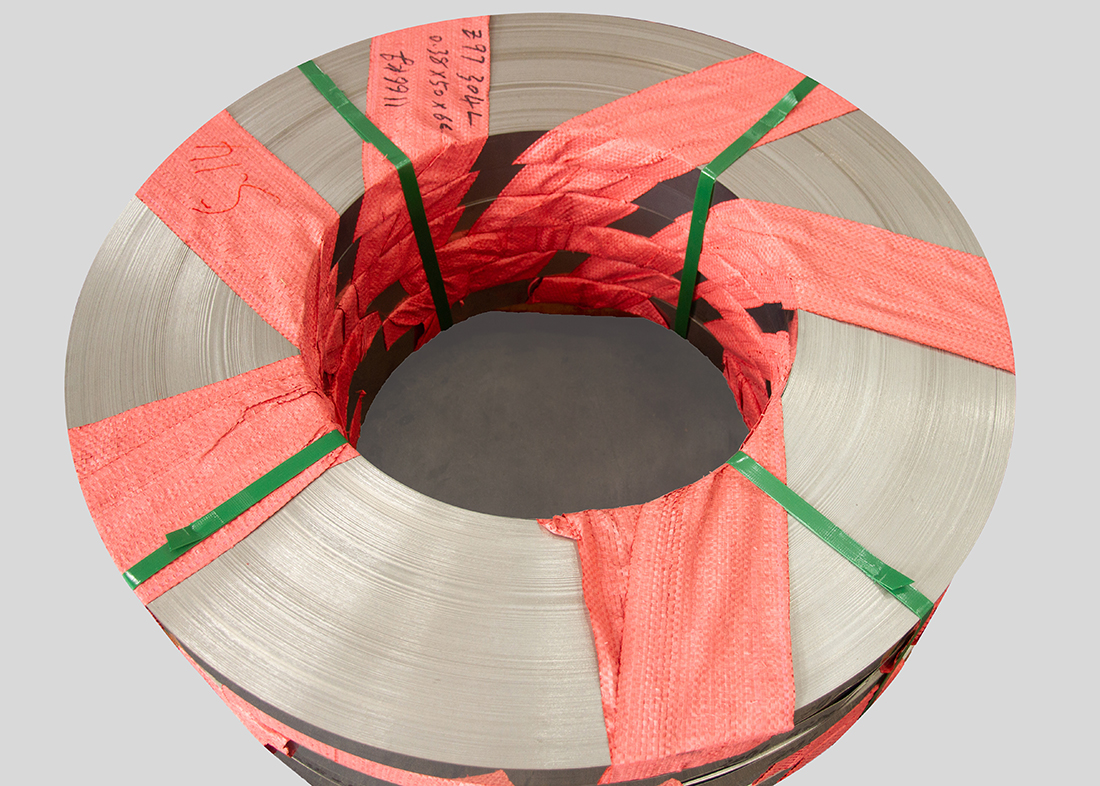
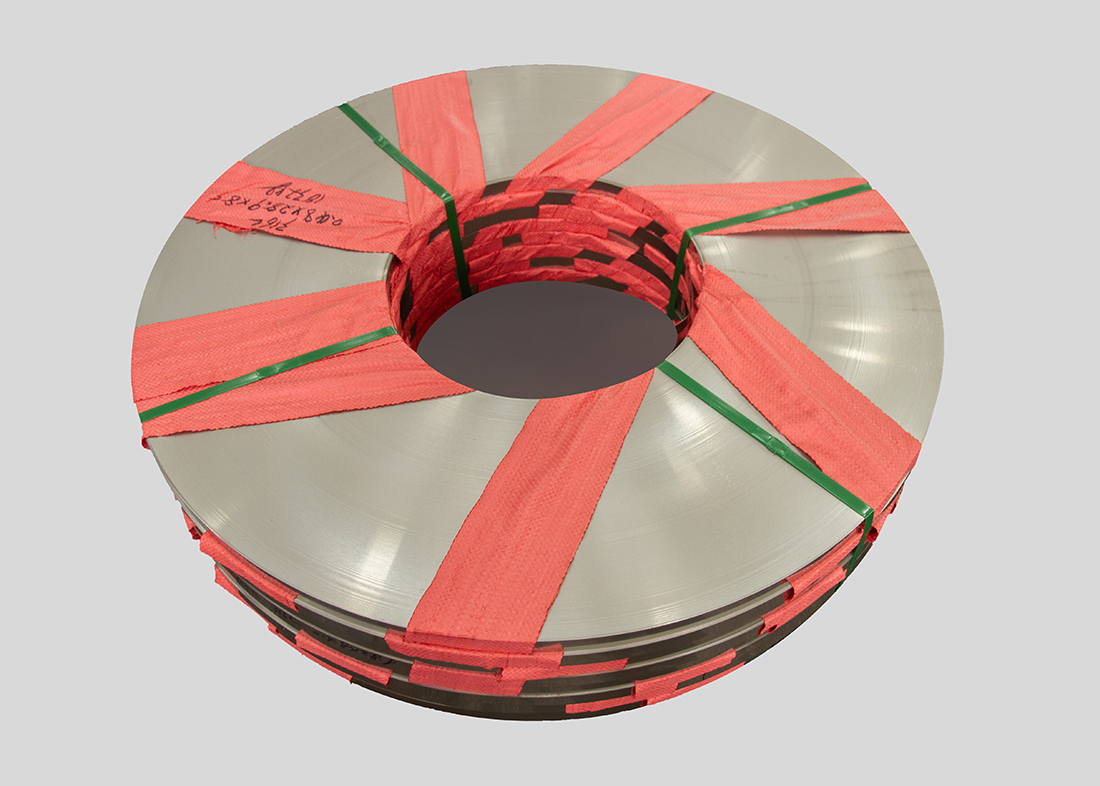
Stainless steel strip, with its excellent corrosion resistance, good cold forming ability, reliable welding performance, stable mechanical properties, and smooth surface state, can adapt to various complex working conditions and processing needs. It is widely used in mechanical equipment manufacturing, electronic appliances, automotive industry, hardware products, medical equipment, kitchen and ba
2026-02-25 -

How to meet the heavy load requirements of stainless steel coils
To meet the heavy load requirements, the core of stainless steel coils lies in improving their strength, wear resistance, corrosion resistance, and deformation resistance through material selection, structural design, and surface treatment, in order to adapt to high load and high stress industrial scenarios. The following is the specific implementation plan:
2026-02-05 -

What industries have a high demand for stainless steel strips
The industries with high demand for stainless steel strips are ranked by scale as building decoration, automobile manufacturing, home appliance manufacturing, electronics/3C, chemical/pharmaceutical, new energy, and precision machinery/medical equipment. Among them, building decoration is the traditional largest market, while automobiles and electronics are the rapidly growing emerging main forces
2026-01-27 -

Where are hot-rolled stainless steel coils mainly used in stainless steel coils
Hot rolled stainless steel coils are widely used in scenarios that require thickness and structural strength due to their large thickness, high strength, relatively low cost, and good plasticity and corrosion resistance. The core application areas are as follows: 1. In the field of mechanical equipment manufacturing It is the core raw material for producing basic components of heavy mach
2026-01-20 -

What is the core anti rust element of stainless steel strip
The core anti rust element of stainless steel strip is chromium (Cr), and its anti rust principle and auxiliary anti rust element functions are as follows: 1. The core rust prevention mechanism of chromium When the chromium content in stainless steel strip is ≥ 10.5%, chromium will react with oxygen in air or corrosive media, forming a dense, stable, and strongly adhered chromium oxide pas
2026-01-13 -

Why is stainless steel coil used in heavy equipment
Heavy equipment (such as construction machinery, mining equipment, port machinery, wind power equipment, etc.) operates under harsh conditions, enduring heavy loads, corrosion, high and low temperatures, and other challenges. Stainless steel coils, with their comprehensive advantages of high strength, corrosion resistance, formability, and durability, have become the material of choice for key com
2026-01-05 -

What are the raw materials for stainless steel strips
Stainless steel strip is a strip-shaped stainless steel product made from stainless steel billets as the core raw material, processed through processes such as hot rolling, cold rolling, and finishing. Its core raw material is the stainless steel base material, and the composition ratio of the base material determines the key properties of stainless steel strip such as corrosion resistance, streng
2025-12-29 -

What is the functional treatment process for stainless steel coils
The functional processing technology of stainless steel coils is to endow the basic material with exclusive functions such as rust prevention, wear resistance, aesthetics, conductivity/insulation, etc., to meet the special usage needs of different industries. The technology is mature and highly targeted. The specific classification and details are as follows:
2025-12-23 -

What is the surface treatment of stainless steel strip
The surface treatment of stainless steel strip is a key process to improve its corrosion resistance, aesthetics, and processing adaptability, and the corresponding treatment process needs to be selected according to downstream application scenarios (such as home appliances, electronics, precision machinery). The following are common surface treatment methods, process characteristics, and applicabl
2025-12-15
- 07-222026
What equipment is stainless steel strip commonly used in the energy industry
Classify and organize according to new energy, traditional electricity, oil and gas petrochemicals, hydrogen energy, and nuclear power, and distinguish three types of uses: ultra-thin precision steel strips, structural bundling steel strips, and heat-resistant conveyor steel strips:
- 07-132026
What issues should be noted when rolling stainless steel coils
Stainless steel has high deformation resistance, is prone to work hardening, is easily oxidized at high temperatures, and is prone to cracking at the edges. It is divided into two parts: hot-rolled billet rolling and cold-rolled precision rolling. The raw materials, temperature, process parameters, equipment, lubrication, plate shape tension, surface protection, and later microstructure and proper
- 07-072026
What are the main uses of hot-rolled stainless steel coils in stainless steel coils
Hot rolled stainless steel coil is a thick material coil produced by high-temperature rolling, with a thickness range of 1.5-16mm and a surface with oxide black skin. It is thick in size, high in strength, and does not require appearance. It is mainly used in structural pressure bearing, chemical equipment, and heavy machinery scenarios.
- 06-302026
Why does stainless steel strip become magnetic after cold processing
1、 Core material foundation: 304/316L itself is austenitic non-magnetic stainless steel 304 and 316L belong to austenitic stainless steel. In the factory solution annealed state, all internal crystals are austenitic structure, and the austenitic crystal structure does not have ferromagnetism. The new soft steel strip is almost non-magnetic, and the magnet does not adsorb.
- 06-222026
What processing can be done on stainless steel coils
1、 Open coil basic processing (the first process of coil material) 1. Kaiping/Splitting Kaiping: Stainless steel coils are uncoiled, leveled, and cut into flat plates (stainless steel plates) for cutting, bending, and laser cutting. Slitting: Large rolls are cut into narrow strips of steel for welding pipes, steel strips, precision stamping, strapping, and decorative edge strips.
 Jiangsu Lichao New Material Technology Co., Ltd.
 WeChat ID:jinjiayi0512

 Add WeChat
 Contact us
 The phone