




- 09-142026
Selection of surface coating for stainless steel strip and its impact on subsequent processing steps
Stainless steel strip protective film (mainly PE protective film) is used to protect the surface of the board during storage, cutting, bending, and stamping processes, preventing scratches, indentations, and dust pollution. The selection of the film coating needs to match the surface type, processing technology, service environment, and peeling time of the stainless steel, referring to GB/T 20878
- 09-082026
What is the function of the stainless steel coil leveling (finishing) process
Flattening, also known as smoothing, is a small reduction rate rolling process after cold rolling and annealing. The reduction rate is usually only 0.5-3%, without changing the material thickness specifications. It relies on the rolling mill to lightly press the surface of the steel strip, and its main functions are as follows:
- 09-012026
How to solve the problem of large stamping rebound of stainless steel strip
1、 At the material level (source priority) 1. Reasonably reduce the hardness of materials For the same grade, the lower the hardness, the higher the elongation, and the smaller the rebound. Example: The original rebound of 301-3/4H was too large. If conditions permit, it can be changed to 301-1/2H, and the rebound will significantly decrease; The cost is a decrease in elasticity, an
- 08-242026
Why is stainless steel coil used in stamping hardware
Stamping hardware is the use of punching machines to punch, bend, and stretch sheet metal. Stainless steel coils are used as raw materials for coil materials, taking into account material properties, coil processing advantages, corrosion resistance, appearance, and mass production. They are widely used in various stamping hardware parts.
- 08-172026
What are the precautions for stainless steel strips in the storage process
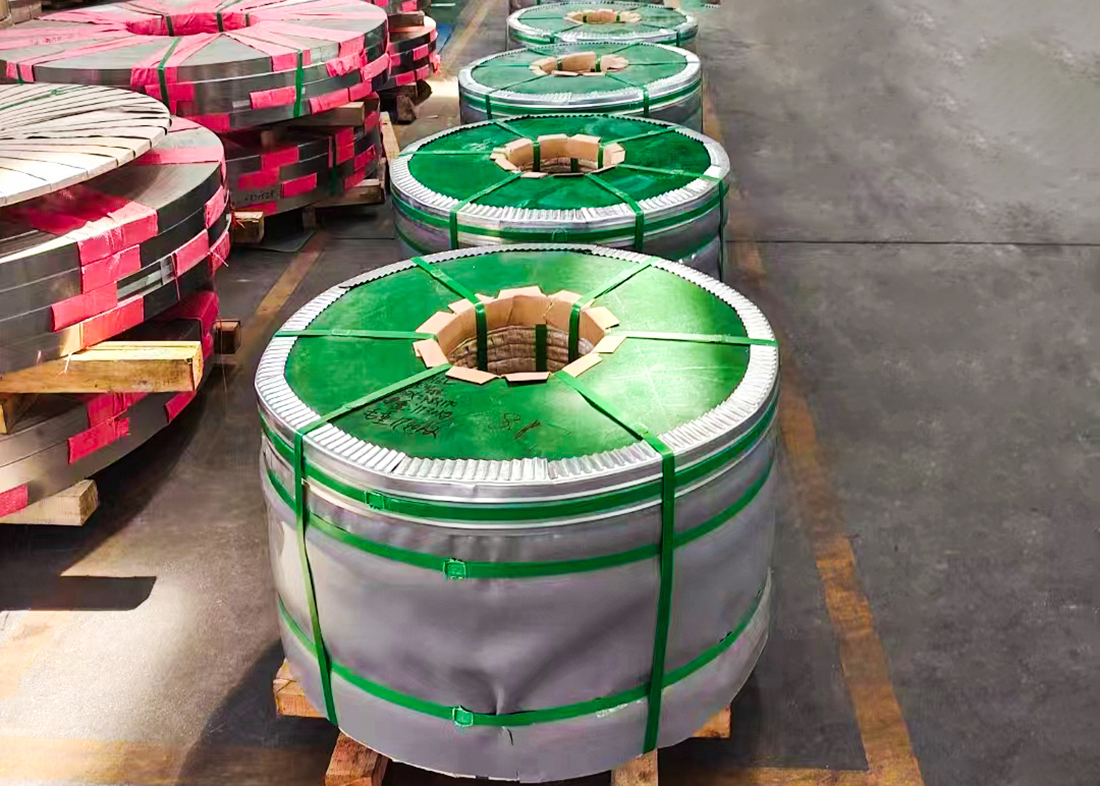
Core storage risks of stainless steel strips: iron ion contamination, rust, moisture pitting, surface scratches, coil deformation, mixed material errors, label loss. Once rust spots appear on austenitic stainless steel, they are difficult to remove.
 Jiangsu Lichao New Material Technology Co., Ltd.
 WeChat ID:jinjiayi0512

 Add WeChat
 Contact us
 The phone